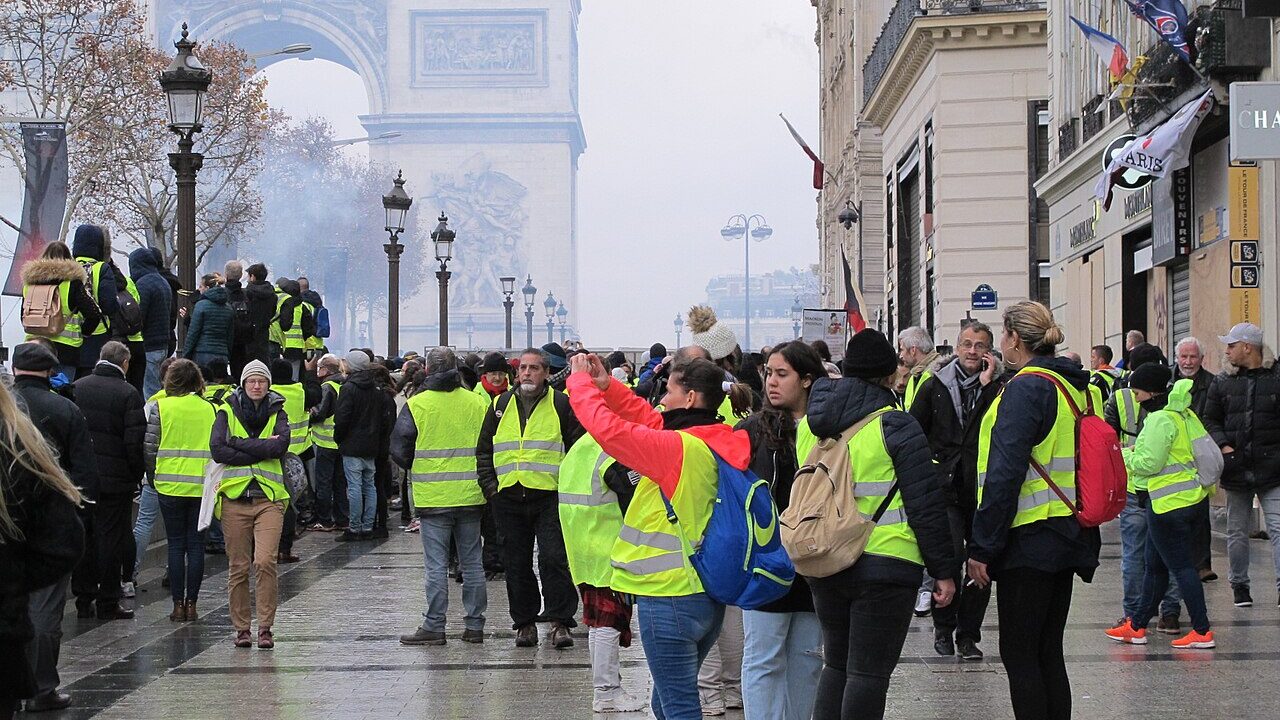
France rioters pay bill began as a response to one night, and grew into a response to a movement. The bill was initially drafted after riots that followed Paris Saint Germain Champions League victory in May, when celebrations turned violent. Its significance grew after October 17, when cost of living protests across France spilled into looting and vandalism on a far larger scale, with almost 2,500 businesses damaged, more than a thousand ransacked, looted or set on fire, and damage estimated at near a billion euros. The Senate version, passed by 229 votes to 105, reflects both origins: a law about riot damage, expanded to cover protest violence in general.
The expansion is what makes the bill controversial. The original May context involved sports celebration violence, a relatively contained problem with identifiable participants. The October context involves mass demonstrations where the overwhelming majority protested peacefully, and where violence occurred on the margins. Applying joint liability, under which a person in a violent group can be made to pay for damage done by others, to mass protest settings raises a different question: how to distinguish a rioter from a protester who happened to be nearby when violence broke out. The bill’s answer is knowledge and dispersal orders: a person who knowingly joins a group preparing violence, or who stays after two police orders to disperse, can be liable. Critics say that test is too broad in a crowd.
The Senate also added measures beyond liability. The bill includes new administrative bans on demonstrations, additional penalties barring foreign nationals from French territory, harsher sentences, expanded use of judicial drones and algorithmic video surveillance, and evictions from social housing for troublemakers. A separate bill approved on Tuesday allows rapid removal of social media content calling for insurrection or armed action. Together, the package represents a substantial expansion of public order powers, justified by the government as urgent after October 17, and criticised by the left as an assault on assembly and expression.
From May to October: how a bill grows
Laws that grow in response to successive crises often carry the logic of the first crisis into the second, where it fits less well. A sports riot law assumes a crowd gathered for celebration, with violence as the main event. A protest law must assume a crowd gathered for speech, with violence as a marginal and contested element. The Senate rioters pay bill history shows that growth clearly: a May bill, expanded in October, passed in the early hours of Wednesday after an accelerated procedure. Accelerated procedure produces law quickly, but it also produces law with less scrutiny, which is part of why the National Assembly debate matters.
Interior Minister Laurent Nunez has stressed urgency, arguing that ordinary citizens should not bear the cost of vandalism. Far right leader Marine Le Pen, whom polls place as frontrunner for next spring’s presidential election, supports the legislation, and the far right backed it in the conservative led Senate. That political alignment means the bill is not only a public order measure. It is also a positioning move ahead of a presidential election, in which law and order, cost of living and protest rights will all be central issues.
The Assembly must narrow it
The National Assembly, where no bloc holds a majority, can narrow the bill to its defensible core: liability for those who actually participate in violence, recovery that does not strip minimum income benefits, and surveillance powers with clear judicial oversight. Or it can pass the Senate version largely intact, accepting joint liability and benefit deductions as the price of deterrence. The choice will shape not only the next protest, but the next election, because voters will judge whether the state protected both shopkeepers and peaceful protesters, or sacrificed one for the other.