
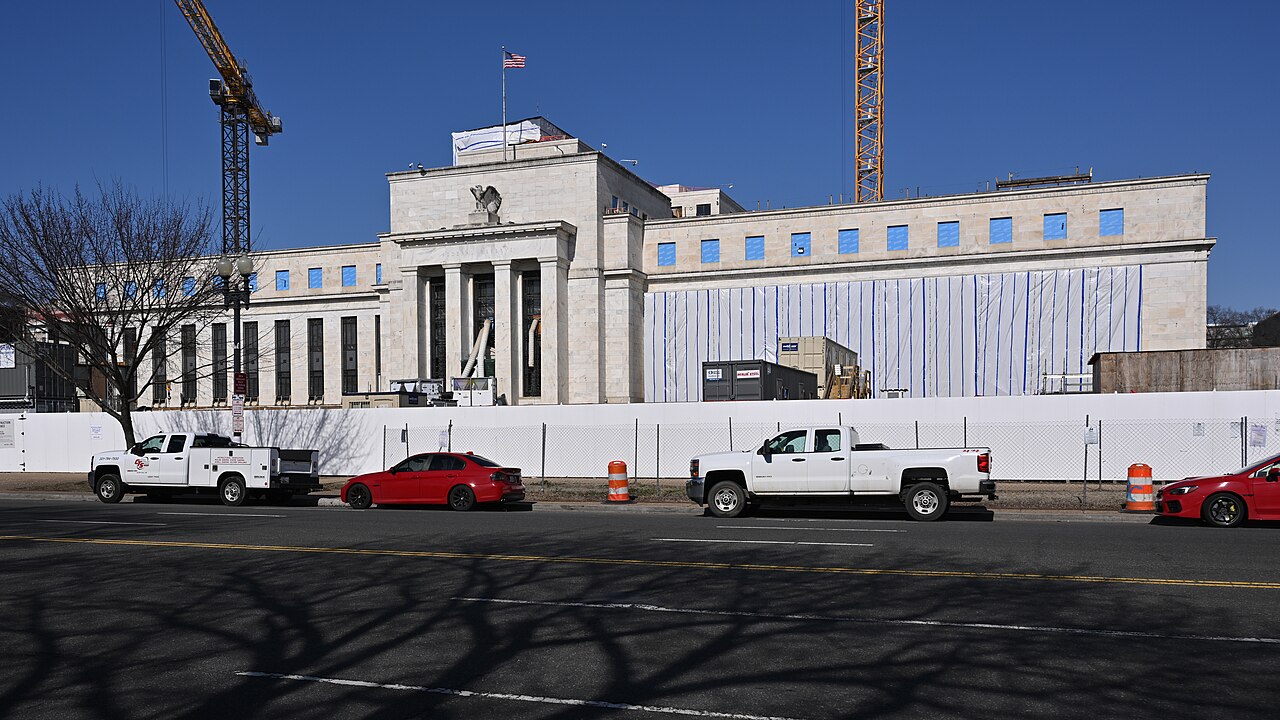
Senior Federal Reserve officials are signaling that interest rates may need to rise further over the coming months, even as bond markets strain under yields not seen in two decades. One regional Fed president said this week that rates could climb over the next six to nine months, describing the push to return inflation to the central bank’s 2 percent target — a goal he put at roughly 18 months away. A Fed governor separately said further increases are needed, though not necessarily at consecutive meetings.
Markets have taken notice. The 10-year Treasury yield has traded around 5.3 percent, the 2-year near 4.8 percent, and the 30-year recently touched 5.71 percent, its highest since 2002. Futures pricing compiled by the CME Group has put the likelihood of another hike after the October meeting at roughly one in five — up from negligible not long ago.
Higher yields are spreading beyond Treasuries. Mortgage rates near 7.4 percent — the highest in three years — are squeezing home affordability while perversely giving some buyers leverage in markets where sellers are starting to concede on price. The federal budget deficit, meanwhile, has jumped to nearly $2 trillion, adding supply pressure to the bond market as Washington borrows heavily into rising rates.
The Fed’s next decision will test how much tightening financial markets have already done on the central bank’s behalf. For borrowers, businesses and homebuyers, the era of cheap money is not coming back on any timeline officials are currently offering.
How investors read Fed signals between meetings
The Federal Reserve sets a target range for the federal funds rate, but officials also shape financial conditions through speeches, interviews, projections and testimony between formal decisions. Regional Reserve Bank presidents and members of the Board of Governors do not carry identical weight in every market move, yet their language is parsed for changes in emphasis: whether inflation is described as persistent, whether labor market cooling is seen as sufficient, and whether policy is characterized as restrictive enough.
Those judgments are compared with incoming data. Inflation reports, employment figures, consumer spending and financial conditions can validate or contradict an official’s outlook within days. Futures markets translate the combined picture into implied probabilities for the next meeting and for the path beyond it. A probability near one in five for a later hike, as reported here, does not mean traders expect that outcome as a central case. It means the distribution of risks has moved enough that a previously remote path can no longer be ignored.
Why the 2 year, 10 year and 30 year yields tell different stories
The two year Treasury yield is especially sensitive to expectations for Fed policy over the near term. The ten year yield combines those expectations with growth, inflation and term premium, the compensation investors demand for holding longer debt. The thirty year yield adds greater exposure to long run fiscal supply and inflation uncertainty. When longer yields rise faster than shorter yields, markets may be pricing some combination of resilient growth, persistent inflation, heavier Treasury issuance and reduced willingness to hold duration.
The transmission to households is direct but uneven. Mortgage rates tend to follow longer term yields plus a spread that reflects lender and mortgage bond market conditions, so they can remain high even if the Fed pauses. Credit card and some business borrowing costs track shorter rates more closely. Higher yields also tighten conditions by raising discount rates for equities, increasing government interest expense and strengthening competition for investor funds. The decision ahead is therefore not only whether the central bank raises its policy rate again. It is whether officials judge that bond markets, banks and borrowers have already tightened conditions enough to slow demand, or whether market yields could retreat quickly if the Fed signals it is finished, undoing part of that restraint.
Related reading: Dow Rallies 400 Points on Energy Highs as Indexes Head for Weekly Gains · Telecom Giants Tumble as SpaceX Buys Nationwide Low-Band Spectrum for Starlink Mobile · Webull Slides 20% After House Panel Flags Structural Ties to China