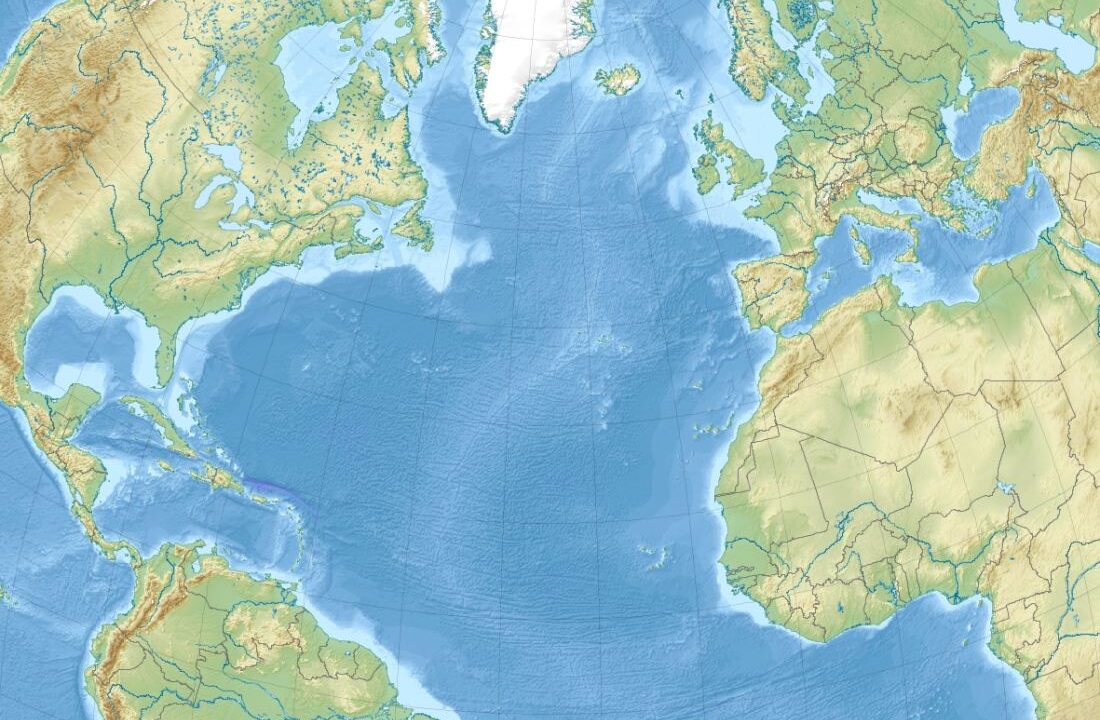
Human-caused warming is not just heating the North Atlantic — it is reorganizing how its weather organizes itself, according to a new modeling study of wintertime atmospheric circulation.
Weather over the North Atlantic tends to settle into a handful of recurring regimes: patterns of high and low pressure that steer storms toward or away from Europe, eastern North America and the Arctic. Using large ensembles of climate simulations under a high-emissions scenario, researchers found that anthropogenic warming produces a pronounced reorganization of those winter regimes — shifting how often each pattern occurs and how long it persists.
The implications reach well beyond meteorology. Seasonal forecasts, climate-risk assessments and adaptation planning all lean on assumptions about how frequently particular circulation patterns appear. If the deck of weather patterns itself is being reshuffled, historical frequencies become a shakier guide for insurers, water managers, farmers and emergency planners on both sides of the ocean.
The authors note an important caveat: the analysis rests on a single climate model, and the next step is to test whether the same reorganization appears across multiple models and emissions pathways. Even so, the study underlines a shift in climate science itself — from tracking averages to tracking variability. The atmosphere, the researchers argue, is being quietly reorganized, and the changes will be felt less as a new normal than as a new set of surprises.
Related reading: Scientists Who Trust Technology to Fix the Climate Act Less on It Themselves, Survey Finds · Satellites Give the First Global Measure of Aerosol Cooling on the Climate · An Atlantic Weather Pattern Has Shaped Greenland's Rain and Snow for 11,600 Years