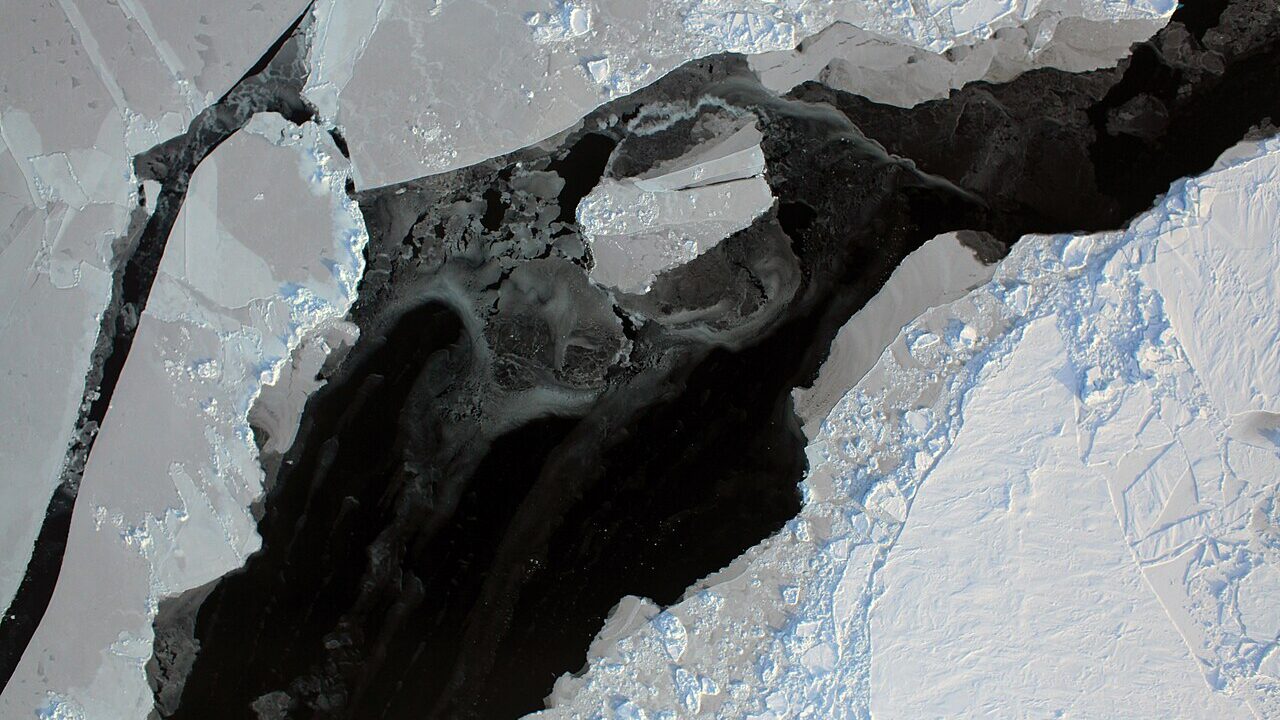
The Arctic’s melt season — the stretch of the year when sea ice shrinks — has stopped getting longer. A NASA-led study of satellite records found that after decades of lengthening, the melt season stabilized around 2010, even as the Arctic continues to warm nearly four times faster than the global average.
The melt season is now about 40 days longer than it was in 1979, researchers found, but almost all of that increase happened before 2010, driven mainly by ice freezing later in the autumn rather than melting earlier in spring. In the fastest-changing regions during the 2000s, the season grew by up to five days per year as retreating ice exposed dark open water that absorbed sunlight and delayed the fall freeze-up.
Since 2010, the pattern has changed. Changing cloud cover has reduced the sunlight reaching parts of the Arctic Ocean, and with most of the thick, multiyear ice gone, the younger, thinner ice that remains responds more to year-to-year weather — clouds, storms and winds — than to a steady seasonal trend. The result is a melt season that swings widely from year to year while holding roughly level on average.
The scientists caution that the pause may prove temporary. Thick ice still persists north of Greenland and the Canadian Arctic Archipelago, and continued thinning there could trigger another period of rapid loss. The finding, published in Communications Earth & Environment, rests on satellite observations from 1979 to 2023 — and on continuing to watch a region whose next phase is genuinely uncertain.
Related reading: Warming Is Quietly Reorganizing North Atlantic Weather Patterns, Model Study Warns · Scientists Who Trust Technology to Fix the Climate Act Less on It Themselves, Survey Finds · Satellites Give the First Global Measure of Aerosol Cooling on the Climate