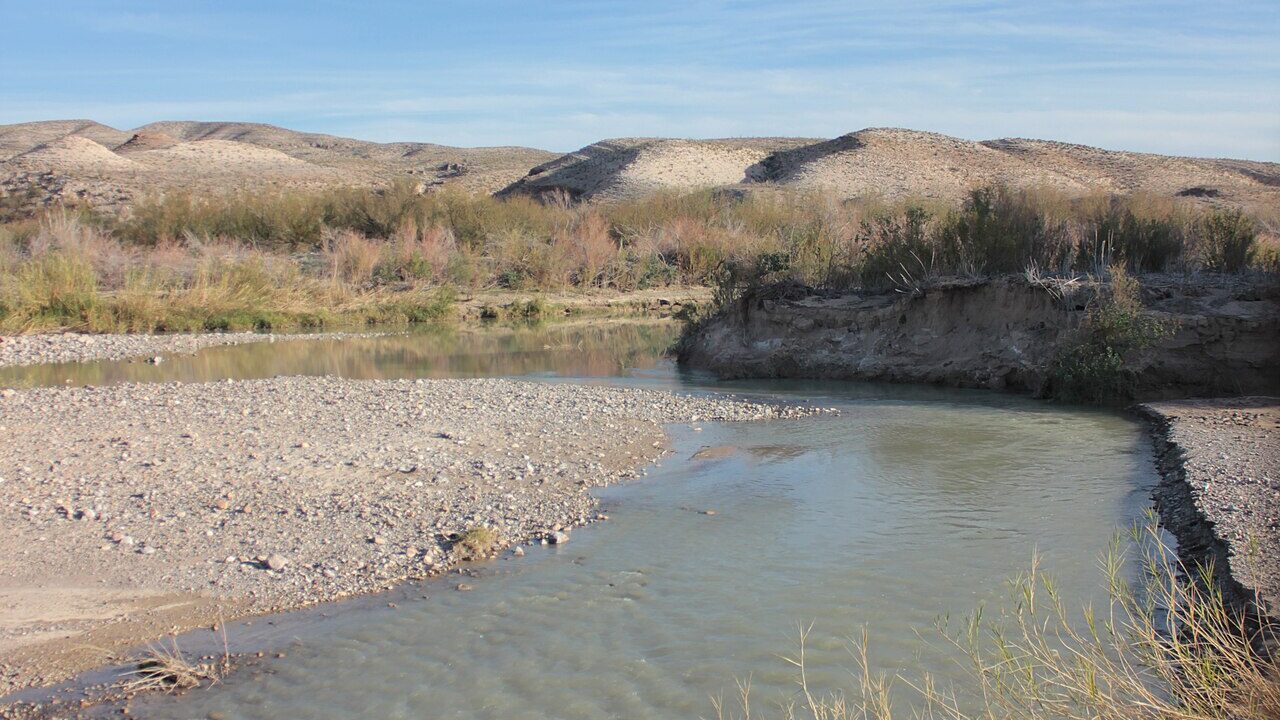
A federal judge has temporarily blocked the administration from building border barriers and related infrastructure across Texas’ Big Bend sector, ordering the government to halt construction and ground-disturbing activities unless it complies with environmental and other applicable laws.
U.S. District Judge Kathleen Cardone issued the preliminary injunction in El Paso after local residents, landowners and preservation groups sued over the project, which forms part of a broader federal border initiative combining vehicle barriers, patrol roads, lighting and surveillance technology. The order covers Big Bend National Park and stretches of privately owned land along the Rio Grande. The judge found the plaintiffs were likely to succeed on at least one of their claims and faced serious, irreparable harm without an injunction.
The project has had a stop-and-start history. Crews began clearing land in August, prompting protests and lawsuits. The Border Patrol’s commissioner later paused construction amid bipartisan criticism of its impact on the park’s landscape and wildlife, saying he wanted to evaluate the area personally. When the agency signaled work would resume after that pause lapsed on September 30, the court’s order shut the restart down.
Opponents argue the remote, rugged terrain already deters crossings and that the sector sees far fewer of them than other stretches of the Texas-Mexico border. Federal officials have warned that barriers elsewhere could redirect crossings into the region. The injunction is temporary and does not resolve the underlying lawsuit, which continues.
What a Preliminary Injunction Does and Does Not Decide
A preliminary injunction is an early court order intended to preserve the existing situation while a lawsuit proceeds. To obtain one, plaintiffs generally must show that they are likely to succeed on at least part of their claim, that they face harm which money alone could not repair, and that the balance of interests favors intervention. Environmental and land use disputes often rely on the concept of irreparable harm because ground clearing, road building or habitat disturbance may be difficult to reverse even if the plaintiffs ultimately win. Issuing the order does not amount to a final judgment that a project is unlawful. It means the court has concluded that construction should pause, or proceed only under stated legal conditions, until the merits receive fuller consideration. The government can seek modification or appeal, and the underlying case continues through briefing and potentially a trial or summary judgment.
Why Environmental Review Becomes Central in Border Construction
Large federal construction projects can trigger obligations to study environmental effects and consider alternatives and mitigation, depending on the statutes and exemptions involved. In a landscape such as the Big Bend region, the relevant concerns can include wildlife movement, water, erosion, cultural resources, recreation and the effects of artificial lighting and patrol activity. Private land adds another layer because access, easements and property rights may be contested separately from the public land questions. Courts examine not only whether an agency studied impacts, but also whether it followed required procedures before committing resources. A project designed around barriers, roads and surveillance can therefore be delayed by questions about each component, even when the government asserts a strong border security interest. Those procedural requirements are not technicalities to the courts that enforce them; they are part of how Congress instructed agencies to make decisions.
The Broader Policy Argument Around Remote Border Terrain
The dispute captures a recurring disagreement in border enforcement. Critics of construction in remote desert and mountain areas argue that terrain itself is a deterrent and that resources should be concentrated where crossings and traffic are more common. Federal officials counter that barriers in busier sectors can shift routes, and that surveillance and access roads may matter as much as a physical obstacle because agents need to detect and reach activity across vast distances. Both arguments can be true in different places, which is why site specific evidence matters in court. The injunction described here is temporary, but its practical effect is significant: it prevents an administrative restart while judges examine whether the project, in this particular sector and on these particular lands, complied with the law. The final answer will determine not only what gets built, but where and under what environmental conditions.
How the Case May Proceed From Here
After a preliminary injunction, the parties usually return to court to develop the factual and legal record. The government may present declarations about border operations and environmental compliance, while the plaintiffs expand evidence about land, wildlife and recreational harm. A judge can convert an early ruling into a longer lasting order if the record supports it, or narrow the restrictions as specific legal issues are resolved. Settlement is also possible, although cases involving national policy and multiple landowners often resist simple compromise. Meanwhile, the practical status quo is defined by the injunction itself: no restart that conflicts with its terms. That pause, rather than any final judgment, is what residents and construction planners must work around for now.
Related reading: Judge Orders Kennedy Center Closure Plan Unsealed as Privilege Fight Escalates · 800,000 Colorado Ballots Carry a Rail-Tax Question Their Voters Cannot Decide · Man Shot by ICE Officer in Marble Hill Had a Child in the Car, City Leaders Say